
Thailand is sometimes called the ‘Land of Smiles’, but behind that smile lies a precise, though rarely explicitly stated, code of social behaviour. Knowing a few basic rules not only helps you avoid unintentionally causing offence, but is also a sign of respect, which Thais greatly appreciate in foreigners. Body hierarchy: the head and the […]
July 13, 2026
Thailand is sometimes called the ‘Land of Smiles’, but behind that smile lies a precise, though rarely explicitly stated, code of social behaviour. Knowing a few basic rules not only helps you avoid unintentionally causing offence, but is also a sign of respect, which Thais greatly appreciate in foreigners.
Body hierarchy: the head and the feet
In Thai cosmology, the human body has its own hierarchy – the head is its holiest part, the seat of the soul, whilst the feet are the least dignified, symbolically the most ‘impure’. This gives rise to several specific rules: do not touch another person’s head, even as a gesture of affection towards a child; do not point at anything with your foot; and do not point the soles of your shoes towards people, Buddha statues or images of the royal family. When sitting cross-legged on the temple floor, it is worth remembering not to point your feet towards the main altar.
Wai – a gesture that speaks louder than words
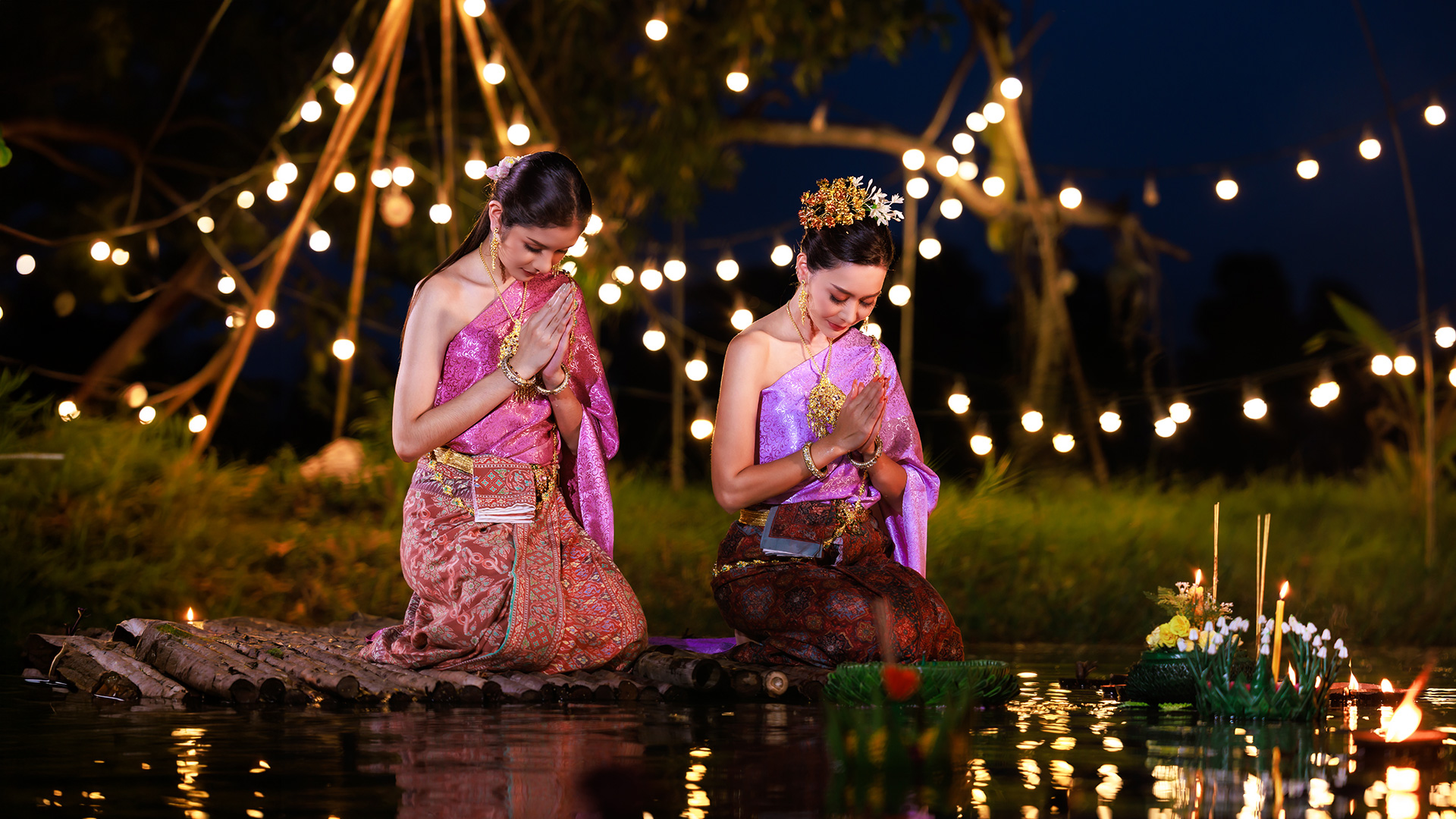
The traditional Thai greeting, the wai, involves placing the palms together at chest height, combined with a slight bow of the head. The subtlety of this gesture lies in the fact that its form varies depending on the relationship – the higher the hands are placed and the deeper the bow, the greater the respect expressed. The highest form, with the hands at forehead level, is reserved for monks, images of the Buddha and the royal family. As a foreigner, we do not need to initiate the wai, but it is good manners to respond with a similar gesture when someone greets us in this way – except when the wai is performed towards us by a service industry worker (e.g. a waiter), which is a gesture of courtesy that does not require a reciprocal gesture.
A subject not to be discussed
The royal family occupies a unique place in Thailand’s social and emotional hierarchy, held in deep, genuine respect by a significant proportion of the population. Criticism of the monarchy is prohibited by law under the lèse-majesté law and carries the risk of criminal liability – this also applies to statements made online and on social media, regardless of the author’s physical location. For those representing diplomatic or consular institutions, this is a subject that should be avoided in any form of public communication; it should be addressed in content solely in a neutral and informative tone, without comment.
In temples and in the presence of monks
When entering a temple, we remove our shoes and dress modestly – covered shoulders and knees are the absolute minimum, and in many places (e.g. the Grand Royal Palace) inappropriate attire means you will be refused entry, although suitable coverings can often be hired at the gate. Buddhist monks are subject to additional rules: women should not touch them or hand them anything directly from hand to hand – items should be placed on a piece of cloth or a table, from where the monk can pick them up himself.
Jai yen – a cool heart as an ideal
One of the most important, albeit intangible, elements of Thai etiquette is an attitude known as ‘jai yen’ – literally ‘a cool heart’. Raising one’s voice, publicly expressing frustration or adopting a confrontational tone – even in situations that in Europe would justify impatience (e.g. a dispute over a restaurant bill or a late bus) – are seen as a serious loss of face – both for the person getting angry and for those around them. Remaining calm, even at the cost of momentary frustration, is valued much more highly here than assertively ‘standing one’s ground’.
Business etiquette
In business dealings, it is worth bearing in mind the hierarchy and showing respect for age and position – business cards are exchanged and accepted with both hands, read carefully before being put away, rather than tucked away without a glance. Punctuality is appreciated, although the Thai style of negotiation tends to be less direct than the European one – a refusal is rarely expressed as a clear ‘no’, but more often as a polite ‘perhaps’ or by changing the subject, which is worth being able to read between the lines.