
It’s the November full moon. The air is finally turning cooler, the rainy season is drawing to a close, and the rivers and canals across the country are filling with thousands of tiny, twinkling lights. This is Loy Krathong – one of the most photogenic and poetic festivals in the world, and for many travellers, […]
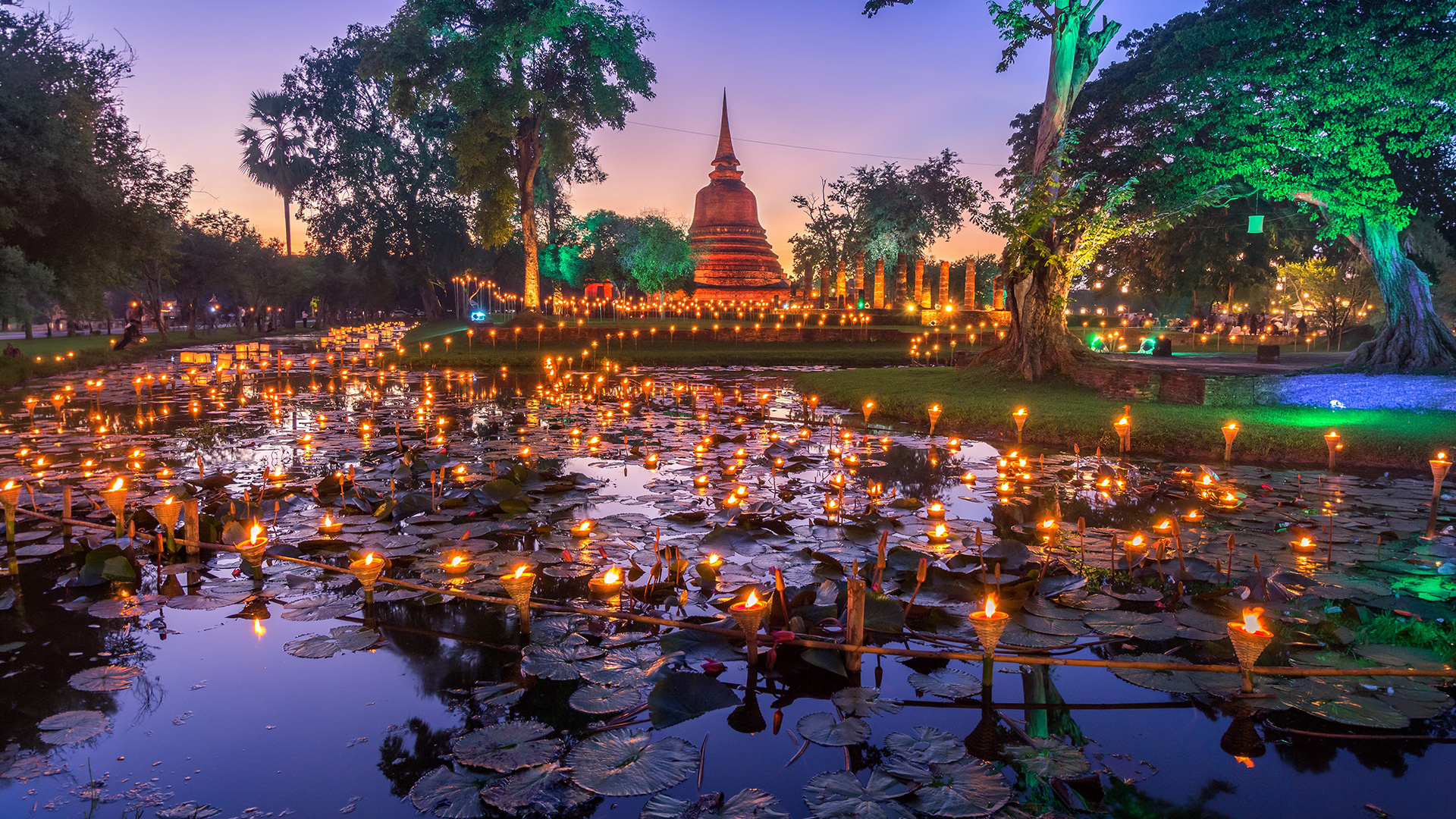
It’s the November full moon. The air is finally turning cooler, the rainy season is drawing to a close, and the rivers and canals across the country are filling with thousands of tiny, twinkling lights. This is Loy Krathong – one of the most photogenic and poetic festivals in the world, and for many travellers, a moment that changes their perception of Thailand forever.
Where did it come from?
The name Loy Krathong literally means ‘floating rafts’ – a krathong is a small, decorative structure, traditionally made from a slice of banana tree trunk, adorned with banana leaves, flowers, incense sticks and a candle. The tradition dates back to the Sukhothai Kingdom in the 13th–14th centuries and is associated with giving thanks to the goddess of water, Phra Mae Khongkha, for her gifts throughout the year, as well as a symbolic purification – along with the raft, one ‘lets go’ of negative thoughts, anger and the misfortunes of the past year. Before setting the krathong adrift, many people place a coin (as an offering), a clipped fingernail or a lock of hair inside it – a physical symbol of what they wish to leave behind.
Yi Peng – when the sky shines too
In Chiang Mai and throughout the Lanna region in the north of the country, Loy Krathong is combined with the local Yi Peng festival, during which thousands of khom loi paper lanterns, filled with warm air from a small flame, soar into the sky. The sight of the illuminated night sky above the old town, reflected simultaneously in the moat filled with krathongs, is for many travellers one of the most moving experiences of their lives – and one of the most frequently photographed moments in Thai tourism. The Yi Peng Festival has its roots in the culture of Lanna, an independent kingdom in the north which retained its own cultural identity until the end of the 19th century, when it was fully absorbed into the centralised Siamese state.
How it works in practice
In the evening, locals and tourists gather by rivers, canals and lakes in Bangkok, a popular spot is the banks of the Chao Phraya River; in Chiang Mai, the Old City moat and the Ping River; and in Sukhothai, the festival’s birthplace, historical re-enactments featuring dance and light displays are held in the Historical Park itself. Krathongs are usually bought on the spot from local vendors or made by hand in many places, workshops are organised where tourists can learn the traditional folding technique.
The environmental dimension of the tradition
Paradoxically, the festival’s popularity has presented a challenge in the past, many krathongs were made from polystyrene, which generated tonnes of waste in rivers and canals after the festivities.
In recent years, local authorities and environmental organisations have been actively promoting biodegradable krathongs – made from banana leaves, rice flour dough or even edible materials, which naturally decompose in the water after a certain period of time. This is a good topic to include in educational content – it shows that a tradition can evolve in the spirit of environmental responsibility without losing its original, spiritual meaning.
Who is this event for
Loy Krathong is an event suitable for every type of traveller – couples seeking a romantic experience, families with children (who love to set the rafts afloat themselves), as well as photographers hunting for that perfect shot of the night sky full of lanterns. However, it’s worth booking accommodation in Chiang Mai well in advance during the Yi Peng festival – this is one of the busiest times of year for tourism in the region, and hotel prices rise significantly during this period.