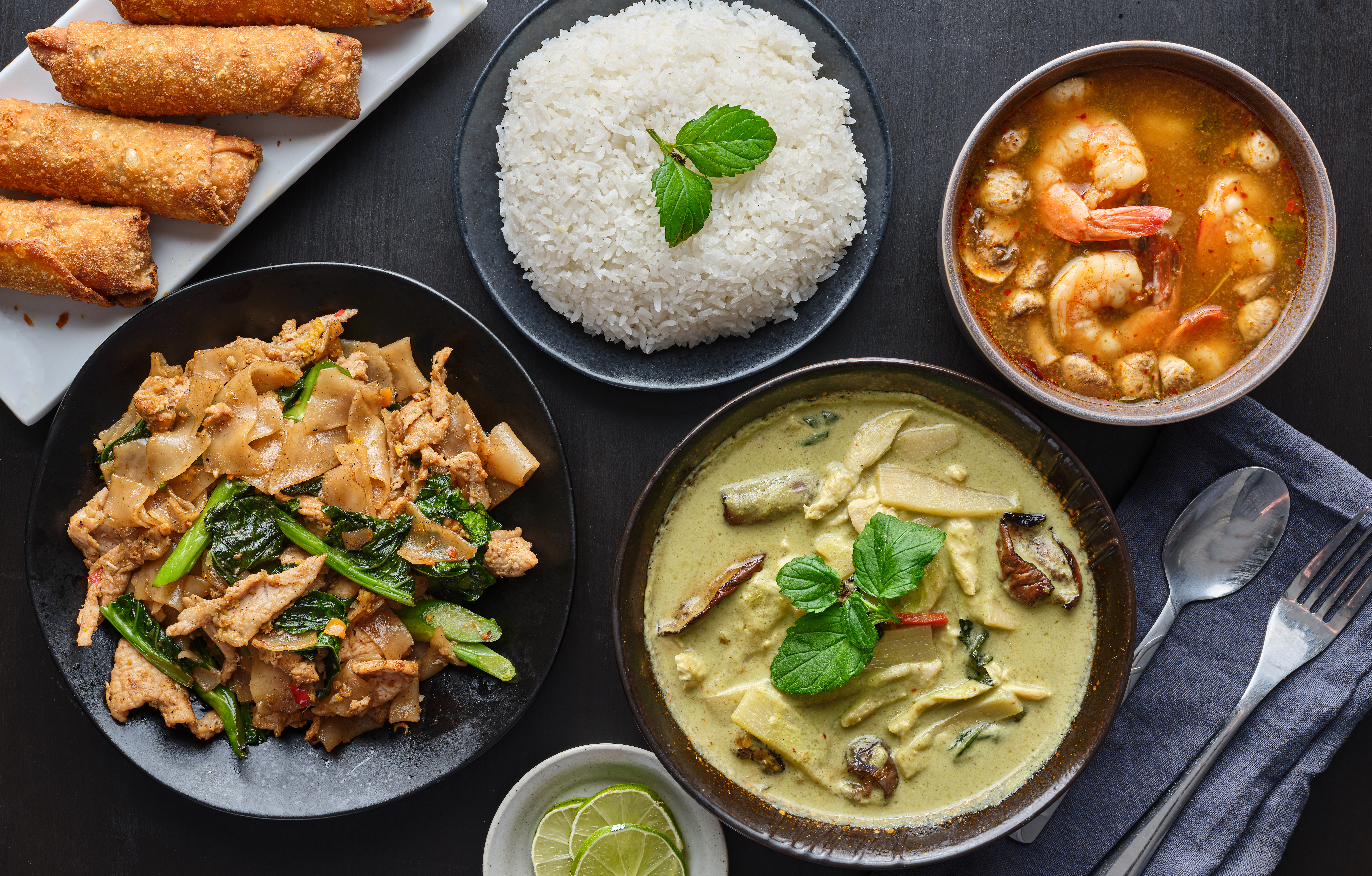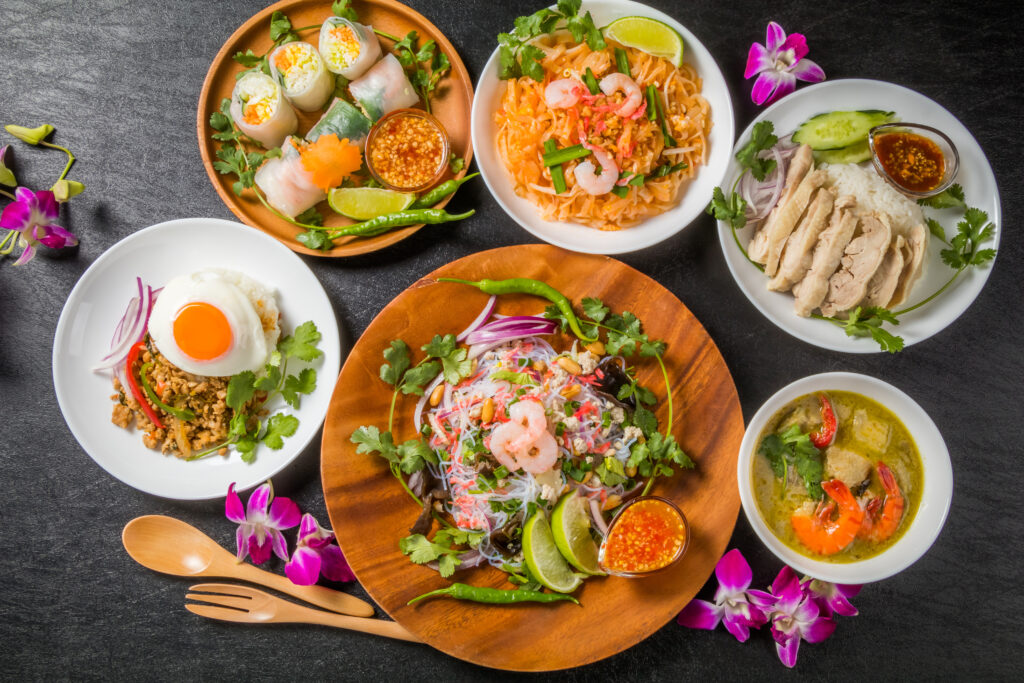

Thai cuisine is often reduced in the West to just a few dishes – pad thai, green curry, tom yum – but in reality it is one of the world’s most regionally diverse cuisines, shaped by geography, the history of migration and centuries of trade with China, India, Persia and the Malay world. The Philosophy […]
Thai cuisine is often reduced in the West to just a few dishes – pad thai, green curry, tom yum – but in reality it is one of the world’s most regionally diverse cuisines, shaped by geography, the history of migration and centuries of trade with China, India, Persia and the Malay world.
The Philosophy of Flavour
At the heart of Thai cuisine lies the principle of balancing four, and sometimes five, flavours in a single dish: spicy (chilli), sour (lime, tamarind), sweet (palm sugar) and salty (fish sauce, soya sauce), to which a fifth dimension – umami – is often added in many dishes, derived from prawn paste (kapi) or fermented fish sauce (nam pla). None of the flavours should dominate – the dish is meant to ‘play’ on multiple levels, and the art of cooking lies precisely in skilfully balancing these elements, a balance often adjusted on the plate by the diner using the set of condiments found on every table: chilli in vinegar, sugar, fish sauce and dried chilli flakes.
Four cuisines in one country
Central Thailand, with Bangkok at its heart, is home to court and urban cuisine – refined, often sweeter than in other regions, and making use of coconut milk and rich curry pastes. This is where most of the dishes known in the West originate, including pad thai and green curry.
The north of the country, with Chiang Mai as its culinary capital, features a cuisine blending Burmese and Chinese (Yunnan) influences with the local traditions of the hill tribes. This is the home of khao soi – a creamy curry soup with egg noodles – and sai ua, a spicy herb sausage characteristic of the region.
The north-east, the Isan region, features cuisine closest to Laotian traditions – simpler to prepare, intensely spicy, and based on sticky rice (khao niao) rather than jasmine rice. This is the home of som tam (green papaya salad) and larb (meat salad with roasted rice), dishes which are now served throughout the country, but whose authentic flavour is best experienced in Isan itself.
The south, with its strong Malay and Muslim influences, boasts the spiciest cuisine in the whole country, making generous use of turmeric, cumin and fresh seafood. This is where gaeng tai pla comes from – an intense curry made from fermented fish innards, a dish definitely for the adventurous palate.
Eight dishes worth knowing
Tom Yum Goong – a spicy and sour soup with prawns, lemongrass, kaffir lime leaves and galangal, one of the most recognisable Thai dishes in the world.
Pad Thai – stir-fried rice noodles with tofu, prawns or chicken, egg and roasted peanuts, created in the 1930s as part of a campaign to build national identity through cuisine.
Som Tam – a spicy green papaya salad from Isan, now popular throughout the country.
Massaman Curry – a milder curry with Persian and Indian influences, featuring cinnamon, cardamom and peanuts; in 2011, CNN included it on its list of the world’s best dishes.
Khao Soi – a northern curry noodle soup, combining Burmese and Chinese influences.
Larb – a meat salad with roasted rice, mint and chilli, an icon of Isan cuisine.
Gaeng Keow Wan (green curry) – made with coconut milk, green chillies and Thai basil.
Mango Sticky Rice – a dessert made with sticky rice, mango and warm coconut milk, at its best during mango season, between April and June.
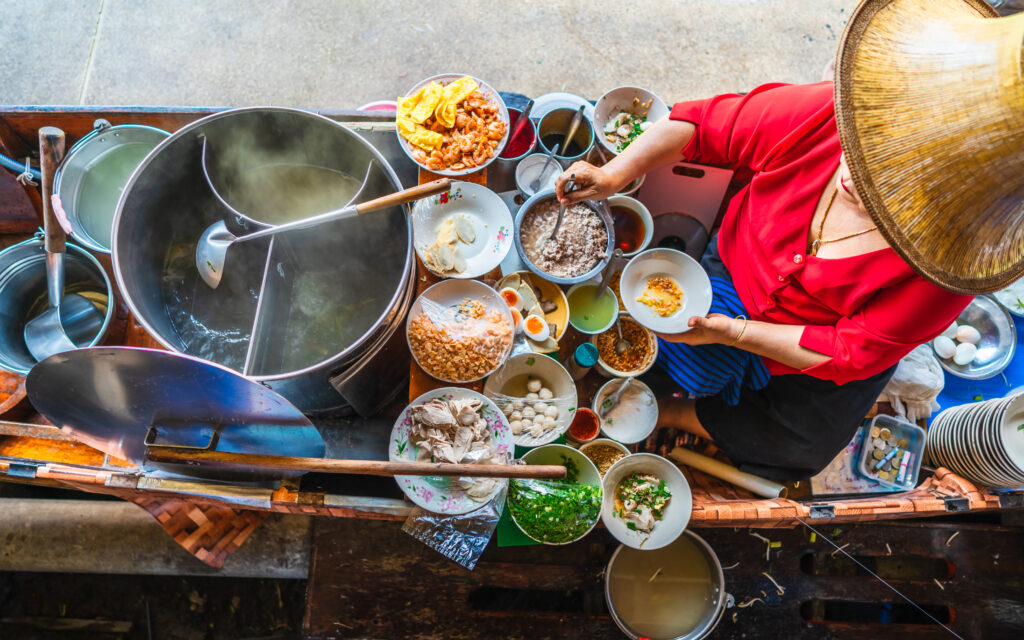
Street food as an institution, not just food
In Thailand, street food is not a substitute for a ‘proper’ restaurant, but a fully-fledged part of the culinary culture – many Thais eat on the street every day, and some stalls, run by the same family for generations, have earned Michelin stars, such as the famous Jay Fai in Bangkok. For travellers, it’s also the best way to experience authentic flavours at an affordable price – it’s worth choosing stalls with a steady stream of local customers, as this is the best indicator of quality and freshness.